
Fidelity Assessments
This page contains links to tools for use by CBHC leaders and supervisors in assessing the fidelity to evidence-based practices.
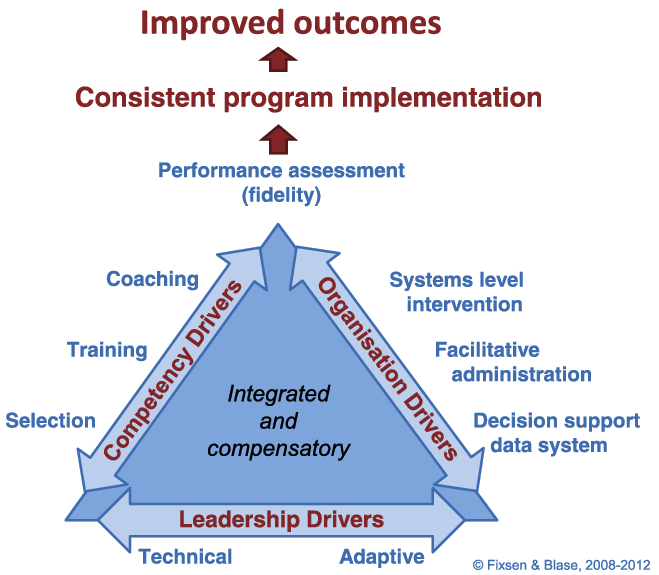
What is fidelity to an Evidence-Based Practice?
- Evidence-based Practices (EBPs) are interventions that when faithfully delivered, will improve valued outcomes.
- The EBP movement for adults with serious mental illness has aimed to spread effective interventions to routine practice settings.
- Fidelity monitoring is a key element in the successful implementation, sustainment, and expansion of EBPs.
- CBHCs are required to use EBPs.
Fidelity is defined as the degree to which a program (or person) implementing an EBP adheres to specific standards defined for that practice model *
* Bond, G. R., & Drake, R. E. (2020). Assessing the fidelity of evidence-based practices: History and current status of a standardized measurement methodology. Administration and Policy in Mental Health and Mental Health Services Research, 47, 874-884

Watch these video clips from the Fidelity Tools webinar.
What is Fidelity to an Evidence-Based Practice?
Fidelity Assessment Tools
Best Practices
Click on the Evidence-Based Practice below for recommended fidelity tools and resources.
Tools:
- Motivational Interviewing Assessment – Supervisory Tools for Enhancing Proficiency (MIA-STEP): Toolkit and training package for supervisors in clinical settings, audiotaped treatment sessions & supervisory rating guide, English and Spanish materials.
- Motivational Interviewing Skill Code (MISC): Used for evaluating the quality of MI from audiotapes and videotapes of individual counseling sessions. Typically more useful in conducting detailed process research.
- Motivational Interviewing Treatment Integrity 3.1.1 (MITI 3.1.1): A coding system for use in research
- that also provides feedback to increase MI skills in non-research settings.
- Motivational Interviewing Competency Assessment (MICA): Provide practitioners with structured and specific feedback regarding their efforts to use MI with their clients. Allows for coding and research.
- Client Evaluation of Motivational Interviewing Scale (CEMI): 11 item Likert scale used for clients to provide feedback and input on the MI approach.
- Video Assessment of Simulated Encounters – Revised (VASE-R): A video-based method for assessing MI skills. The VASE-R includes 18 items that produce a total score and five subscale scores (i.e., Reflective Listening, Responding to Resistance, Summarizing, Eliciting Change Talk, & Developing Discrepancy).
- Assessment of Motivational Interviewing Groups – Observer Scale (AMIGOS – v 1.2): Three scales -18 items documenting group processes, MI, and client-centered style
Resources:
Tools:
- DBT Program Fidelity Scale
- Dialectical Behavior Therapy Program Fidelity Checklist (DBT PFC): Evaluates how a program is structured to include the critical elements of DBT. PDF Version
- DBT AC-I Measure and Manual enables users to evaluate the degree to which individual therapy sessions are consistent with DBT
- https://www.dbtadherence.com/dbtaci-manual
- https://www.dbtadherence.com/practice-sessions
Resources:
Tools:
- Cognitive Therapy Rating Scale Revised (CTRS-R): Measures the way clinicians deliver CBT. Includes components of CBT such as therapeutic skills and conceptualization, strategy, and techniques.
- Cognitive Therapy Scale Rating Manual
- CBT Compliance Checklist
- Cognitive Therapy Rating Scale-Revised Scoring Rubric
- Recovery-Oriented Cognitive Therapy (CT-R) is designed to promote empowerment, recovery, and resiliency in individuals with serious mental health conditions
- CT-R-Fidelity-Scale.pdf (beckinstitute.org): Measures whether a program is consistent with the CT-R model
Resources:
- Recovery-Oriented Cognitive Therapy (CT-R) Training
- TF-CBT PRACTICE Checklist
- How to Run a Trauma-Focused Cognitive Behavioral Therapy (TF-CBT) Learning Collaborative)
- Rodriguez-Quintana, N., & Lewis, C. C. (2018). Observational coding training methods for CBT treatment fidelity: A systematic review. Cognitive Therapy and Research, 42(4), 358–368. https://doi.org/10.1007/s10608-018-9898-5
Tools:
- Brief Negotiated Interview – BNI Adherence Scale (BAS): provides practitioners with a brief, objective method to evaluate their BNI skills and give feedback to them about their performance.
- BNI Adherence and Competence Checklists: Versions available for alcohol, smoking, and opioids.
- MD3 SBIRT Coding Scale can be used to evaluate implementation skills for fidelity, training, assessment, and research. Measures quality and fidelity of SBIRT interactions addressing alcohol, tobacco, illicit drugs, and prescription medication misuse.
Resources:
- Using Motivational Interviewing in Substance Treatment
- TIP 64: Incorporating Peer Support Into Substance Use Disorder Treatment Services
- Enhancing Motivation for Change in Substance Use Disorder Treatment
- TIP 41: Substance Abuse Treatment: Group Therapy
- Are We There Yet? A Review of SBIRT Implementation and Fidelity Tools and Proficiency Checklists
- Strategies to promote the implementation of SBIRT in healthcare settings – a scoping review