
Welcome!
As a key component of MassHealth’s Behavioral Health Roadmap for Reform initiative, the BH Clearinghouse is a resource to support the training of Massachusetts Community Behavioral Health Centers (CBHCs), and Behavioral Health Help Line (BHHL) staff. We are excited to add Massachusetts Mental Health Centers (MHCs) and Children’s Behavioral Health Initiative (CBHI) providers to the Clearinghouse!
- If you change organizations, and your new organization is still eligible, send us an email to update your email and username!
- Hang this poster in your staff areas to promote this free resource!
- If you need a live support session, send us an email!
In addition to offering live instructor-led training, the BH Clearinghouse offers a catalog of high-quality self-paced online training in evidence-based behavioral health practices across ten competency areas:
- Clinical Competencies
- Clinical Supervision and Coaching
- Continuing Medical Education for Physicians
- Crisis Intervention
- Cultural Humility
- Evidence-Based Treatment
- State Agency Collaboration
- SUD Assessment and Treatment
- Trauma-Informed
- Youth
- Youth Children’s Behavioral Health Initiative (CBHI) Intensive Care Coordination
Upon successful completion of training, many courses are eligible for free Continuing Education (CE) or Continuing Medical Education (CME) credits. These approvals are listed by course in the Learning Portal.
Upcoming Live Events
-
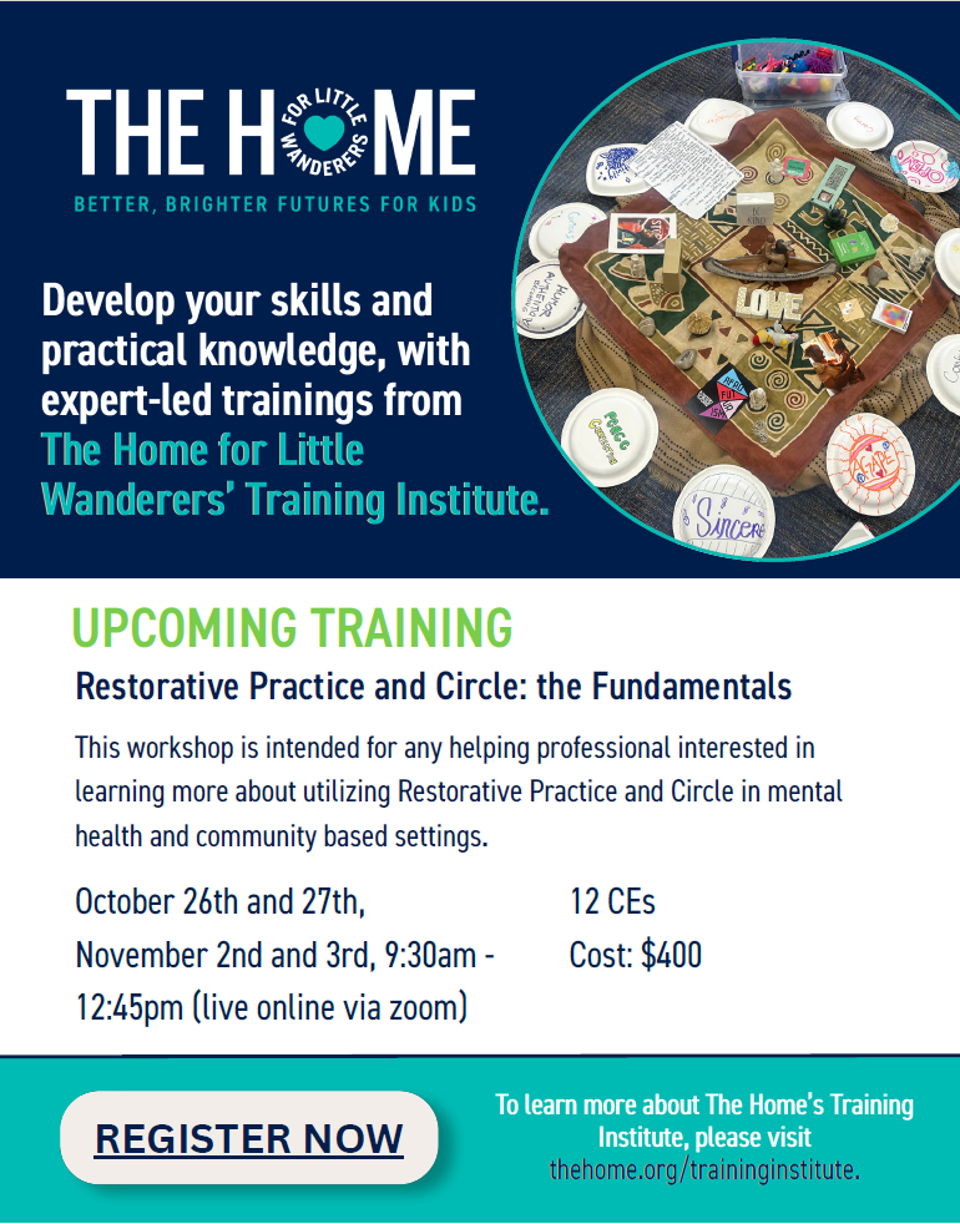
Restorative Practice and Circle: the Fundamentals (Virtual)
Partner program announcement – We are pleased to share this opportunity but it may have an associated cost.
Restorative Justice is a broad term encompassing a growing social movement to institutionalize peaceful approaches to harm, problem-solving, and violations of legal and human rights. Restorative Practice seeks to balance the needs of the person who was harmed, the person causing harm, and their community(ies) through processes that preserve the safety and dignity for all. Within The Home, Restorative Practice has helped to establish strong relationships by building social and emotional awareness and empathy among clients, families, employees, and administrators. This training will take place in Circle. In the “safe enough” container of Circle, participants will explore their cultural heritage and experiences with power. Through storytelling in Circle, participants will experience the transformative power of being deeply listened to, and co-creating spaces for learning across difference, healing past harm and preventing future harm.
-
Restorative Practice and Circle: the Fundamentals (Virtual)
Partner program announcement – We are pleased to share this opportunity but it may have an associated cost.
Restorative Justice is a broad term encompassing a growing social movement to institutionalize peaceful approaches to harm, problem-solving, and violations of legal and human rights. Restorative Practice seeks to balance the needs of the person who was harmed, the person causing harm, and their community(ies) through processes that preserve the safety and dignity for all. Within The Home, Restorative Practice has helped to establish strong relationships by building social and emotional awareness and empathy among clients, families, employees, and administrators. This training will take place in Circle. In the “safe enough” container of Circle, participants will explore their cultural heritage and experiences with power. Through storytelling in Circle, participants will experience the transformative power of being deeply listened to, and co-creating spaces for learning across difference, healing past harm and preventing future harm.
-
Restorative Practice and Circle: the Fundamentals (Virtual)
Partner program announcement – We are pleased to share this opportunity but it may have an associated cost.
Restorative Justice is a broad term encompassing a growing social movement to institutionalize peaceful approaches to harm, problem-solving, and violations of legal and human rights. Restorative Practice seeks to balance the needs of the person who was harmed, the person causing harm, and their community(ies) through processes that preserve the safety and dignity for all. Within The Home, Restorative Practice has helped to establish strong relationships by building social and emotional awareness and empathy among clients, families, employees, and administrators. This training will take place in Circle. In the “safe enough” container of Circle, participants will explore their cultural heritage and experiences with power. Through storytelling in Circle, participants will experience the transformative power of being deeply listened to, and co-creating spaces for learning across difference, healing past harm and preventing future harm.
For more information or to learn more about bringing this training to your state/organization/providers in or outside of Massachusetts, please contact us at: BHClearinghouse@umassmed.edu